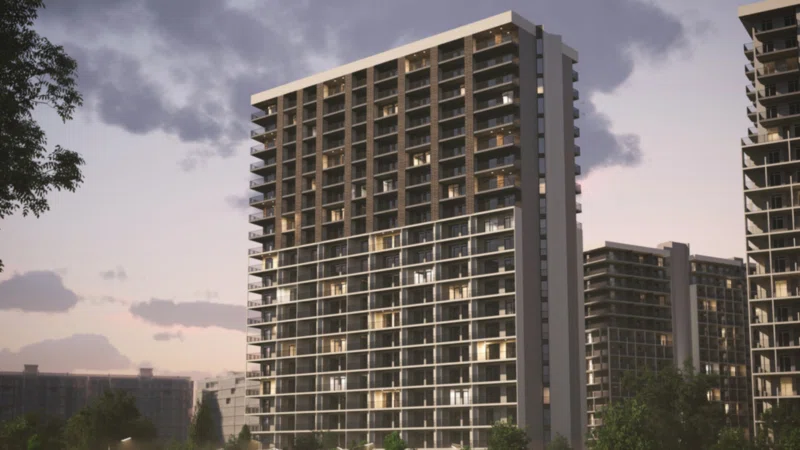
Object typeResidential
Completion dateQ1 2026
DeveloperArchi
Total areafrom 40 m² to 122 m²
Down Payment15%

Heavy traffic and ongoing urban development have made transport accessibility one of the key factors when choosing property in Tbilisi. Proximity to a metro station affects not only everyday convenience but also a property’s appeal to tenants and future buyers.
Let us examine why the metro supports housing demand, which locations attract the most interest, and what buyers should consider before making a purchase.
The main advantage of the metro is the ability to reach the city centre, business districts, universities, and major transport hubs quickly and predictably. For many residents, this means less dependence on a car, traffic conditions, and daily travel expenses.
Proximity to a station is particularly important for:
However, the presence of a nearby metro station does not automatically make a property attractive or liquid. The condition of the building and apartment, the floor, layout, local infrastructure, and actual walking time to the station are equally important.
Buyers and tenants often consider properties near the following stations:
The reasons behind the popularity of each location differ. In central districts, buyers value access to business, cultural, and urban amenities. In more remote neighbourhoods, the metro provides a convenient connection to the centre and other parts of the city.
It would therefore be misleading to compare these areas based solely on their distance from the metro. An apartment near a central station may cost more because of its prestigious location while offering a lower-quality building or higher noise levels. In residential districts, the entry price is usually lower, but demand depends more heavily on the quality of the housing stock and access to shops, schools, public transport, and other everyday amenities.
Apartments near metro stations are generally easier to rent out and resell because good transport links appeal to a broad audience. Such properties attract both tenants and buyers who are already considering the future resale potential of their investment.
Nevertheless, proximity to the metro does not guarantee high returns. If the transport advantage is already reflected in the purchase price, the final yield may be similar to that of properties in other areas.
When choosing a property, buyers should therefore compare its price with the expected rental rate, renovation costs, the condition of the building, and demand in the specific location.
Before purchasing an apartment near the metro, consider:
It is also important to ensure that the price has not been inflated solely because of the property’s proximity to a station. An apartment located 10–15 minutes from the metro in a better-quality building may offer better value than one situated directly beside the station, particularly when its layout, noise levels, building condition, and renovation costs are taken into account.
Proximity to the metro remains a significant advantage for property in Tbilisi, particularly for those who value mobility, plan to rent out their apartment, or are considering its future resale potential. However, distance from the station should never be the only factor in assessing a property.
The true appeal of an apartment also depends on the condition of the building, the quality of the renovation, local infrastructure, noise levels, and the convenience of the walking route. The best choice is therefore not simply a property near the metro, but one that combines good transport links with comfort, a reasonable price, and sustainable demand.