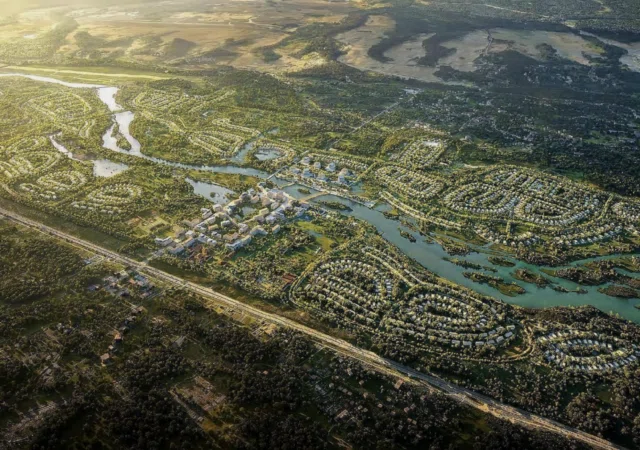
Object typeResidential
Completion dateQ1 2029
DeveloperDreamland Oasis
Total areafrom 36 m² to 144 m²
Down Payment5 000 $

The education system in Georgia is built on a European model and includes four levels: preschool, general (school), vocational, and higher education. Through its integration into the Bologna Process, the system has been aligned with international standards and is recognized abroad. At the same time, the country remains open to international students, offering flexible conditions and a wide range of educational programs.
In Georgia, children are typically enrolled in preschool from the age of 2–3, with the main focus not on academic learning but on overall development, including the development of speech, thinking, social skills, and preparation for school.
There are two main types of institutions:
When enrolling in a Georgian school, a child must be at least 6 years old by the end of the calendar year (by December 31). A 10-point grading system is used in schools, while in the early years students are not formally assessed.
The structure of schooling is organized as follows:
It is worth noting that until 2026, school education in Georgia lasted 12 years; however, following amendments to the Law on General Education, the final (12th) grade has become optional and is taken by choice.
Education is compulsory up to grade 9, after which students receive a certificate of basic education. They may then either continue their studies in upper secondary school or enroll in a college. A certificate of complete secondary education, obtained after completing the full course (grades 11–12), is required for admission to a university.
Vocational education in Georgia is primarily practice-oriented: programs combine theoretical learning with hands-on training and prepare students for specific careers in fields such as IT, tourism, construction, and services. Training is provided in colleges and specialized institutions, often in cooperation with employers, which helps align skills with labor market needs. The main advantage of this pathway is the opportunity to enter the workforce more quickly and start a career in a chosen profession.
Higher education in Georgia is organized according to the ECTS credit system, which is widely used across Europe and allows for the recognition of academic workload and the transfer of students between universities.
It is divided into three levels:
In Georgia, fields such as medicine, IT, business, and engineering are particularly popular. Higher education is open to international students: universities offer programs in multiple languages, relatively affordable tuition fees, and simplified admission procedures. In addition, many institutions participate in international exchange programs such as Erasmus+, allowing students to study or complete internships abroad in European and other partner universities.
Conclusion
Thus, the education system in Georgia represents a well-structured and consistent framework that covers all stages, from early childhood development to higher education. It combines state standards with flexible choices, allowing students and families to select not only the type of institution but also the language of instruction and educational pathway.