Tbilisi: A Route Through the City’s Main Landmarks

Tbilisi is often called a city of contrasts, where ancient fortresses and sulfur baths stand alongside modern architecture, while old courtyards give way to panoramic views of the city center. Most of the main attractions are located close to one another, making it easy to combine the Old Town, Abanotubani, Narikala Fortress, the Bridge of Peace, Rike Park, Metekhi, and Shardeni Street into one well-rounded walking route.
In this article, we will explore the places worth visiting in Tbilisi, especially if it is your first time in the city.
Old Tbilisi 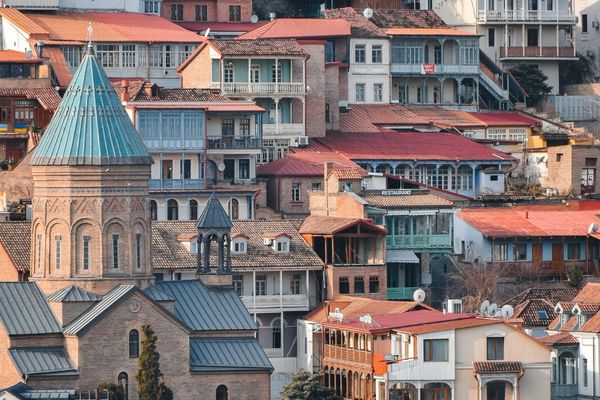
Old Tbilisi, the historic heart of the Georgian capital, rightfully takes first place among the locations from which to begin exploring Georgia. This district is called “Old” not simply because of the age of its buildings, but because the history of the city itself began here, near the famous sulfur springs, back in the 5th century AD during the reign of King Vakhtang Gorgasali.
Narrow cobblestone streets, historic houses with carved wooden balconies, and ancient churches have preserved the recognizable character of old Tbilisi, where Eastern and European influences still intertwine. Even the names of streets and places reflect this atmosphere: Silver Street, Bread Square, Wine Ascent, and other historic toponyms connected with crafts, trade, and the everyday life of past centuries.
Among the places most frequently visited by tourists in Old Tbilisi are:
- Kala, Meidan, Shardeni, and Shavteli – atmospheric quarters featuring the traditional architecture of the Old Town
- Narikala Fortress – one of Tbilisi’s main symbols and one of the best panoramic viewpoints overlooking the Mtkvari River and the historic center
- Abanotubani and the sulfur baths – an area connected with the legend of the city’s foundation and the origin of the name “Tbilisi,” derived from the Georgian word “tbili,” meaning “warm”
- Metekhi and the monument to Vakhtang Gorgasali – a historic district located on a cliff above the river, known for its church and panoramic views
Bridge of Peace and Rike Park
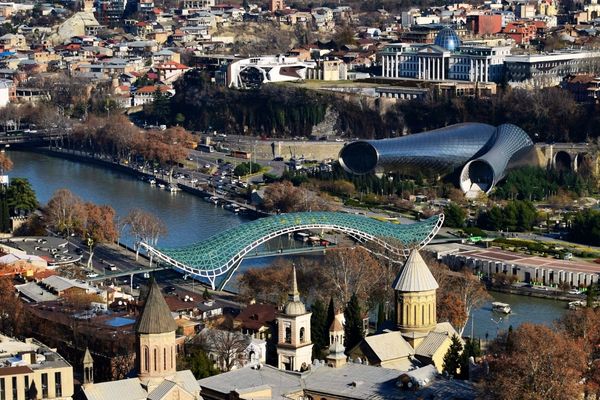
From Narikala Fortress, visitors can descend by cable car to the more modern part of Tbilisi – Rike Park, located on the left bank of the Mtkvari River. This area has become one of the main examples of contemporary urban architecture and public spaces in the Georgian capital. The park features walking paths, fountains, recreation areas, and viewing platforms, and it is frequently used for public events and festivals.
Next to the park stands the Bridge of Peace – a glass pedestrian bridge built in 2010 that connects the historic center with the left bank of the river. Thanks to its unusual design and evening illumination, the bridge has become one of the most recognizable modern symbols of Tbilisi.
Sameba Cathedral / Tsminda Sameba
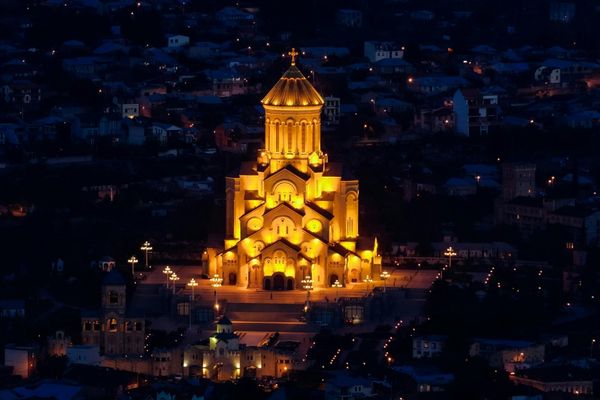
A completely different side of Tbilisi can be seen at the Holy Trinity Cathedral (“Tsminda Sameba”) – the main cathedral of the Georgian Orthodox Church. The cathedral is located on St. Elijah Hill in the Avlabari district, which makes its golden dome visible from many parts of the city. Construction began in 1996 and was completed in 2004, while the cathedral’s height together with the cross exceeds 86 meters, making it one of the largest Orthodox churches in the world.
The complex includes courtyards, gardens, chapels, and viewing terraces overlooking the central part of the city. In the evening, Sameba stands out against the urban landscape thanks to its illumination and elevated location.
Mtatsminda and the Funicular
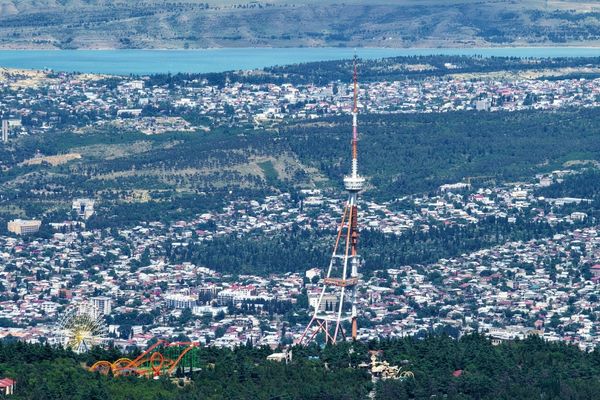
Panoramic views of the city continue on Mount Mtatsminda (“Holy Mountain”), which rises above the central part of Tbilisi. Visitors can reach the summit via the famous Tbilisi funicular, operating since the early 20th century and connecting the city center with the top of the mountain. During the ascent, views gradually open over the Mtkvari River, Old Tbilisi, Narikala Fortress, and the city’s modern districts.
At the top lies Mtatsminda Park, featuring viewing platforms, cafés, amusement rides, and a Ferris wheel. The Pantheon is also located here, where many famous Georgian poets, writers, and historical figures are buried. Thanks to its location more than 700 meters above sea level, Mtatsminda remains one of the main panoramic viewpoints in Tbilisi and an important part of the city’s landscape.
Conclusion
Tbilisi combines historic quarters, modern districts, panoramic viewpoints, and religious landmarks, many of which are located close to one another. Even during a short trip, visitors can walk through the narrow streets of the Old Town, climb up to Narikala Fortress, explore the modern spaces around the Bridge of Peace and Rike Park, visit Sameba Cathedral, and admire the city from the top of Mtatsminda. Such a route offers a general impression of the history, architecture, and atmosphere of the Georgian capital.